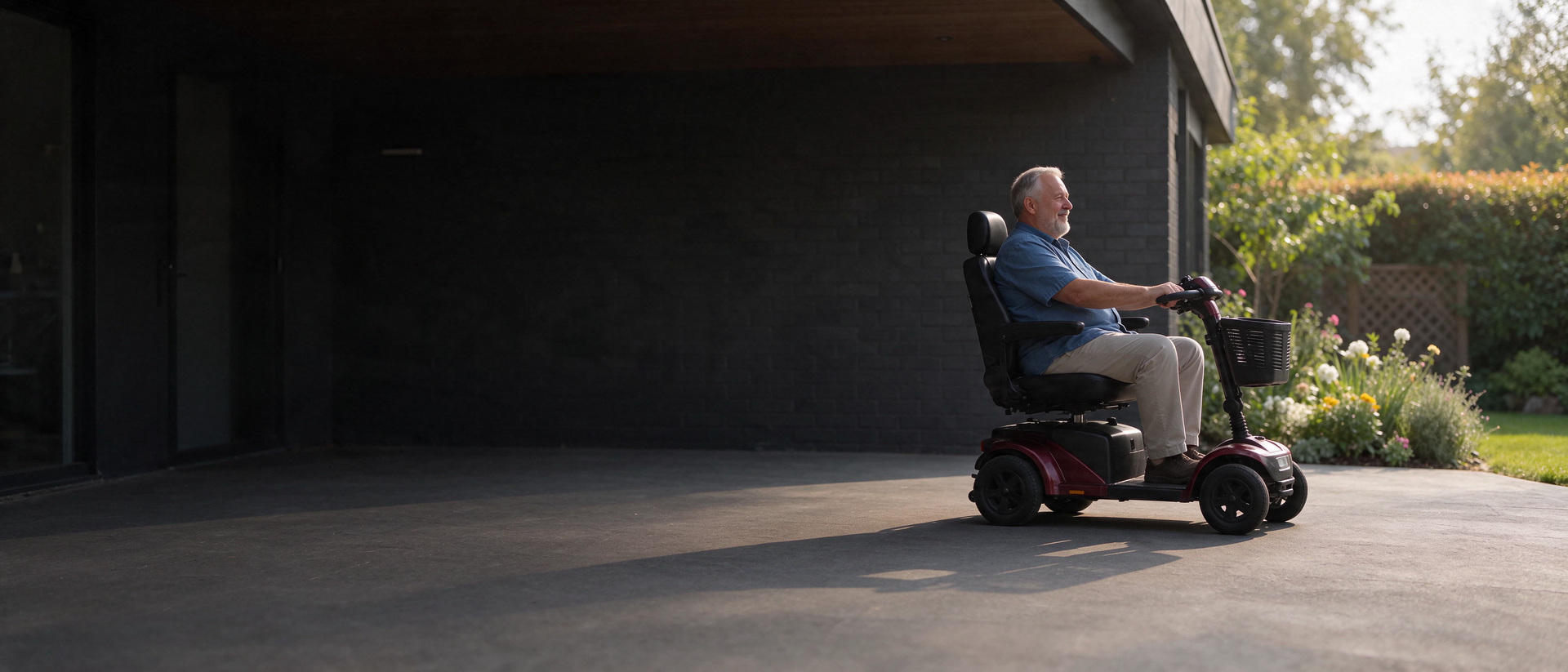
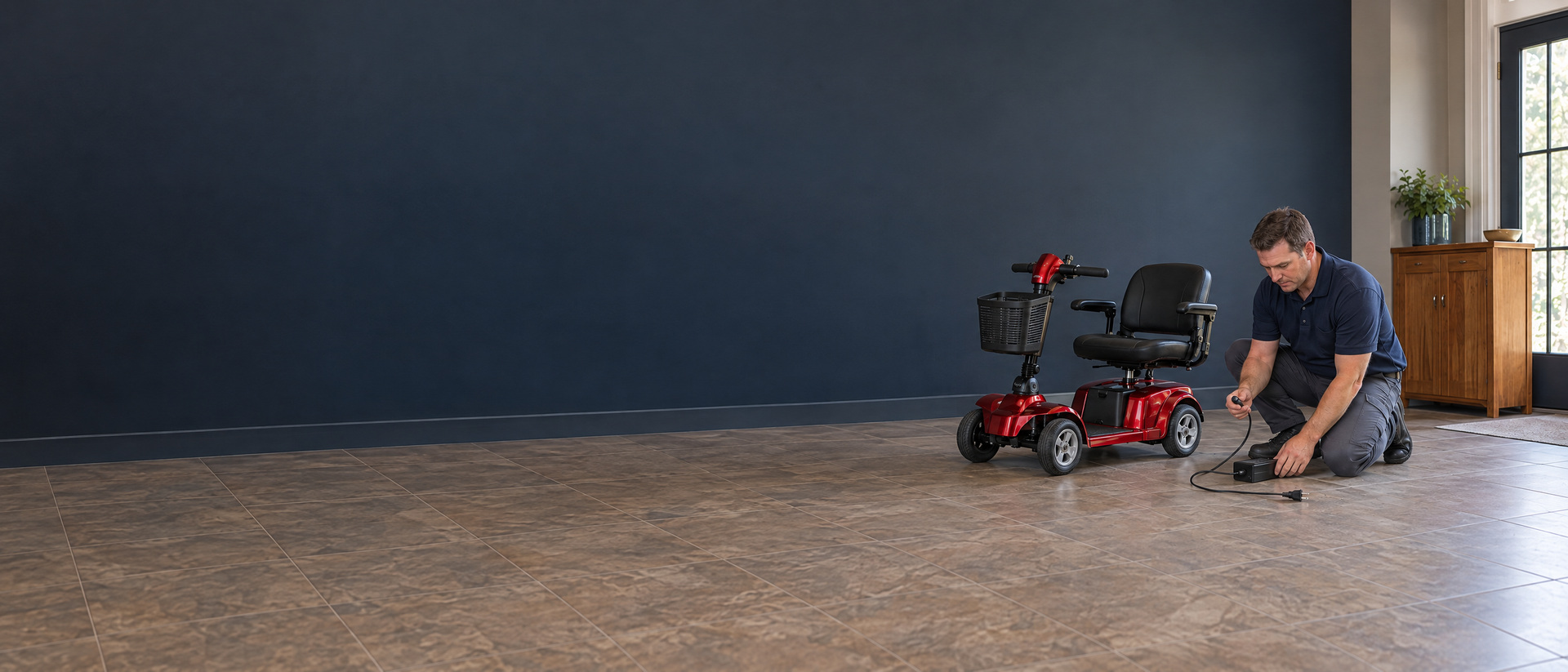
Finding the best mobility scooter for a heavy person starts with one number: the weight capacity. That is because it tells you how much load the frame, motor, and brakes can safely handle. When you get it right, your scooter feels steady, strong, and comfortable. But if you get it wrong, you may face weak hill climbing, shorter range, and a voided warranty.
The good news is that you have more choices than ever, from portable scooters that come apart for a car trunk to sturdy 500 lb models. This guide shows you how to pick the right one.
Quick answer: The best mobility scooter for a heavy person has a weight capacity above your body weight plus everything you carry, with room to spare. First, if your total load is well under 300 lbs, a reinforced travel scooter may work. Next, from about 300 to 400 lbs, look at heavy-duty and full-size scooters with 350 to 400 lb capacities. For loads above 400 lbs, choose a very heavy-duty scooter with a 500 lb capacity, such as the Pride Maxima. Finally, near or above 500 lbs, a heavy-duty power wheelchair is often the safer choice.
Specs come from maker websites and Mobility City product pages as of November 2026, and they can change. So always confirm the weight capacity in your owner’s manual. If you have balance, heart, or breathing concerns, ask your doctor which device suits you best.
In this guide:
- Why weight capacity comes first
- How to find the capacity you need
- Weight classes from 300 to 500 lbs
- Top heavy-duty scooter picks
- Features that matter beyond capacity
- 3-wheel or 4-wheel
- Fitting your home and car
- Scooter or power wheelchair
- Safety tips
- Test drive or rent first
- Frequently asked questions
Why Weight Capacity Matters Most on a Mobility Scooter for a Heavy Person
Every scooter has a maximum weight capacity. Makers set it based on the strength of the frame, motor, axles, and batteries, so it is not just a suggestion. So when you shop for a mobility scooter as a heavy rider, make capacity your first filter, not your last.
Many standard and travel models top out between 250 and 300 lbs, which leaves little room on a mobility scooter for a heavy rider. In fact, Medicare’s coding system calls a scooter “standard” when it supports up to 300 lbs. Above that, you move into the heavy-duty class.
Staying under the limit protects you and your scooter. In fact, Pride Mobility calls this rule mandatory in its Victory Series owner’s manual. It also states that going over the limit voids the warranty. Likewise, Golden Technologies says that exceeding the weight rating on its Companion scooters voids the warranty.
What Counts Toward Your Mobility Scooter Weight Limit
Weight capacity covers more than your body weight. For example, Golden Technologies rates its Companion scooters by maximum payload. That means the rider as well as anything else the scooter carries. So be sure to count all of the following:
- Your weight in the clothes and shoes you usually wear
- Bags, groceries, and anything in the basket
- A portable oxygen tank and its holder
- A cane, crutches, or walker in an accessory holder
- Add-ons such as a canopy, saddle bag, or storage pod
Baskets have their own limits, too. Pride’s Victory manual says never to load a front or rear basket with more than 15 lbs. It also says never to carry an oxygen tank that weighs more than 15 lbs. In addition, Pride warns against carrying passengers, because an extra rider shifts the center of gravity and can cause a tip. In other words, no grandkids on your lap.
How to Find the Right Weight Capacity for Your Scooter
Choosing the right capacity for a heavy rider’s mobility scooter takes just a few minutes. Follow these steps before you compare models.
- Weigh yourself. Use a reliable scale while you wear what you would normally ride in.
- Add your gear. Include everything you plan to carry, from your purse to your oxygen tank.
- Leave room to spare. Pick a scooter whose capacity sits well above your total. That way, small weight changes, a big shopping trip, or a hilly route will not push you past the limit.
- Measure your hips while seated. Then compare that number with each scooter’s seat width. We cover seat sizing below.
- Think about where you will ride. Hills, grass, and gravel ask more of the motor than smooth floors do.
Here is how that math can look in real life. Use these examples as a starting point, and then confirm your choice with a test drive.
| Your weight | Typical gear | Total load | Capacity to consider |
|---|---|---|---|
| 260 lbs | 20 lbs | 280 lbs | 350 lbs or more |
| 320 lbs | 25 lbs | 345 lbs | 400 lbs or more |
| 370 lbs | 20 lbs | 390 lbs | 450 to 500 lbs |
| 430 lbs | 25 lbs | 455 lbs | 500 lbs |
| 480 lbs or more | 20 lbs | 500 lbs or more | A heavy-duty power wheelchair with a 600 lb capacity |
Notice the second row. A 350 lb scooter technically covers a 345 lb load. Even so, it leaves almost no margin. That is why stepping up to a 400 lb model makes sense, since it gives the motor, frame, and battery more breathing room every day.
Heavy-Duty Mobility Scooter Weight Classes From 300 to 500 lbs
Makers and Medicare sort every mobility scooter into a weight class, which helps a heavy rider narrow the list. You do not need Medicare to use these terms. Still, they make shopping easier, because many spec sheets list them. Specifically, the classes below come from the Power Mobility Devices coverage policy that CMS publishes.
| Class | Rider weight capacity | What it usually means |
|---|---|---|
| Standard | Up to 300 lbs | Most travel and compact scooters |
| Heavy duty | 301 to 450 lbs | Stronger frames, larger seats, and bigger batteries |
| Very heavy duty | 451 to 600 lbs | Wide captain’s seats, heavier frames, and full-size bases |
Wondering about coverage? If so, our guide explains whether Medicare pays for power wheelchairs and scooters, including who qualifies.
Up to 300 lbs: Reinforced Travel Scooters
A few travel scooters add stronger frames for heavier riders. The BuzzAround XL HD Suspension 4-Wheel Scooter, for instance, supports up to 300 lbs and weighs 98 lbs in total. Its heaviest piece weighs just 37 lbs, so it is easier to lift into a car. However, it has a smaller seat and a 300 lb ceiling. For that reason, it works best for riders who weigh well under 300 lbs with their gear.
350 to 375 lbs: Portable Heavy-Duty Scooters
This class blends strength with portability, so it suits many riders who drive with their scooter. Golden’s BuzzAround Extreme scooters hold up to 350 lbs, and the BuzzAround LX 3-Wheel holds up to 375 lbs. Better still, all three come apart into pieces for transport. Each one also lists a range of up to 18 miles per charge, plus suspension and bigger tires for bumpy sidewalks.
400 lbs: Full-Size and All-Terrain Scooters
At 400 lbs, you get full-size frames, roomier seats, and more battery options. Mobility City carries three popular 400 lb models from Pride Mobility: the Victory 10, the Revo 2.0, and the Pursuit 2. The first two come apart for transport. The Pursuit 2, on the other hand, stays in one piece and focuses on outdoor power.
450 to 500 lbs: Very Heavy-Duty Scooters
If your total load sits above 400 lbs, look for a scooter with a 500 lb capacity. Many sellers call these bariatric scooters. Pride’s Maxima, for example, supports 500 lbs and has a 22 inch wide seat. Golden Technologies also lists several 500 lb models, including the Avenger, the Eagle, and the Companion Heavy-Duty.
These scooters are larger and heavier than other models. The Maxima, for instance, does not come apart at all. Since Mobility City sells all major brands, ask our team which very heavy-duty models we can show you or order.
Over 500 lbs: Look at Heavy-Duty Power Wheelchairs
Few scooters go beyond 500 lbs. Power wheelchairs, however, reach higher. Pride’s Jazzy 1450, for example, supports up to 600 lbs and offers Synergy seating up to 32 inches wide. If your total load comes close to 500 lbs or more, explore our heavy-duty power wheelchairs. We also compare the two options in detail below.
Best Mobility Scooter for a Heavy Person: Top Picks
Below are the models we recommend most often when someone asks us for a mobility scooter for a heavy person, sorted by capacity. Range always depends on rider weight, terrain, and battery condition. So treat each range as a best-case number.
| Model | Capacity | Range per charge | Top speed | Heaviest piece | Best for |
|---|---|---|---|---|---|
| BuzzAround XL HD Suspension 4-Wheel | 300 lbs | Up to 18 miles | 4 mph | 37 lbs | Lifting into a car |
| BuzzAround Extreme 3-Wheel | 350 lbs | Up to 18 miles | 5 mph | 46 lbs | Tight turns on rough ground |
| BuzzAround Extreme 4-Wheel | 350 lbs | Up to 18 miles | 5 mph | 53 lbs | Portable stability |
| BuzzAround LX 3-Wheel | 375 lbs | Up to 18 miles | 5 mph | 46 lbs | Extra capacity on three wheels |
| Victory 10 4-Wheel | 400 lbs | Up to 13.5 miles | 5.3 mph | 61 lbs | Wide seat choices |
| Revo 2.0 4-Wheel | 400 lbs | Up to 17 miles | 5 mph | 57 lbs | Everyday comfort |
| Pursuit 2 | 400 lbs | 17 or 40 miles, by battery | 9.3 mph | Does not come apart | Outdoor distance |
| Pride Maxima 4-Wheel | 500 lbs | Up to 19.5 miles | 5.8 mph | Does not come apart | Riders near 500 lbs |
The first seven specs come from Mobility City product pages. The Pride Maxima specs, however, come from Pride Mobility’s website.
Best Lightweight Pick Up to 300 lbs: BuzzAround XL HD
Choose the BuzzAround XL HD Suspension 4-Wheel Scooter if you lift your scooter into a car often. That is because it breaks down into light pieces, and the heaviest one weighs only 37 lbs. Compared with the standard XL, it adds heavy-duty suspension, a reinforced frame, and a longer foot platform. You also get LED lighting and a USB charging port. Just remember that its 300 lb limit includes your gear, too.
Best Portable Heavy-Duty Mobility Scooter: BuzzAround Extreme 4-Wheel
The BuzzAround Extreme 4-Wheel Scooter gives you a 350 lb capacity in a scooter that still comes apart. It separates into five pieces with no tools, and the heaviest piece weighs 53 lbs. Its suspension springs and 8 inch tires also smooth out rough sidewalks. Meanwhile, dual U-1 batteries provide up to 18 miles per charge. You can also choose an 18 or 20 inch wide seat.
Best 3-Wheel Heavy-Duty Scooter: BuzzAround LX
Prefer the quick handling of three wheels? The BuzzAround LX 3-Wheel Scooter supports 375 lbs, which is 25 lbs more than the Extreme models. It rolls on 10 inch knobby tires with suspension. It also includes LED lighting, a USB port, and an adjustable tiller. Like the Extreme models, it comes apart for transport, too, with a 46 lb heaviest piece.
If 350 lbs gives you enough room, the BuzzAround Extreme 3-Wheel Scooter offers similar knobby tires and suspension.
Best Seat Choices at 400 lbs: Victory 10
Seat fit matters as much as capacity, and the Victory 10 4-Wheel Scooter offers plenty of options. You can choose a foldable seat or a high-back seat up to 22 inches wide and 20 inches deep. It also supports 400 lbs and reaches 5.3 mph. With the optional 40 Ah batteries, it goes up to 13.5 miles per charge. It also comes apart, although its heaviest piece weighs 61 lbs.
One detail stands out for heavier riders. Pride’s owner’s manual notes that the company tests Victory 10 range at the scooter’s full weight capacity.
Best Everyday Comfort at 400 lbs: Revo 2.0
The Revo 2.0 4-Wheel Scooter pairs a 400 lb capacity with Pride’s Comfort-Trac Suspension. As a result, bumps and sidewalk cracks feel softer. It lists up to 17 miles per charge. Its 20 inch wide seat also sits on a base just 20.75 inches wide, which helps in hallways and doorways. In addition, feather-touch disassembly and under-seat storage make daily use easier. Even so, the heaviest piece weighs 57 lbs, so plan who will lift it.
Best for Outdoor Distance at 400 lbs: Pursuit 2
If you want to cover ground outdoors, look at the Pursuit 2. It rides on 13 inch all-terrain tires with full suspension, and it reaches up to 9.3 mph. Depending on the battery, it goes 17 or 40 miles per charge. You also get a spacious captain’s seat with adjustable armrests. However, this scooter weighs about 243 lbs and does not come apart. For that reason, you will need a vehicle lift to take it with you.
Best for Riders Near 500 lbs: Pride Maxima
The Pride Maxima 4-Wheel supports up to 500 lbs. According to Pride Mobility, it has a 22 inch wide, depth-adjustable high-back seat and a top speed of up to 5.8 mph. Pride also lists a range of up to 19.5 miles and tests it at full weight capacity. However, its base measures 27 inches wide, and the unit does not come apart. So measure your doorways and plan for a vehicle lift before you choose it.
Want to see more models? Browse all of our mobility scooters, from travel models to full-size scooters.
Features That Matter on a Mobility Scooter for a Heavy Rider
Once you know your capacity, these features decide how comfortable a mobility scooter feels for a heavy rider day after day.
Seat Width and Depth for Heavy Scooter Riders
A seat that is too narrow can pinch your hips and cause sore spots. To size it, first sit in a firm chair and measure across the widest part of your hips or thighs. Then look for a seat at least that wide. Heavy-duty scooters often offer seats from 18 to 22 inches wide. Armrests that adjust in width also give you more room.
Seat depth matters, too. Wheelchair fitting guides suggest leaving about two inches between the front edge of the seat and the back of your knees. Finally, a swivel seat makes getting on and off much easier.
Legroom and Tiller Position
Check that your knees clear the tiller when you sit with your feet flat. An adjustable tiller brings the handlebars to you, so you do not have to lean. A longer floorboard also gives your feet more room. When you get on or off, though, avoid putting all your weight on the floorboard or armrests. Pride warns that doing so can tip the scooter.
Suspension and Tires
Suspension absorbs bumps before they reach your back and joints. Bigger tires help, too, because they roll over cracks and small gaps more smoothly. The heavy-duty models in this guide use tires from 8 to 13 inches.
If your scooter has air-filled tires, check the pressure at least once a week, as Pride advises. Low pressure can lead to a loss of control, so always fill to the rating printed on the tire. Solid tires, by contrast, never go flat, but they give a firmer ride.
Motor Power, Hills, and Range
A heavier load also asks more of the motor and battery. Pride explains that climbing ability depends on your weight, your speed, your angle of approach, and your scooter setup. Every scooter also lists a maximum safe incline. The Victory 10 manual, for example, lists a limit of 6 degrees.
Range works the same way, too. Pride notes that range varies with user weight, terrain, battery charge, battery condition, and tire condition. So a scooter that lists 18 miles may travel less far with a heavier rider on a hilly route.
Read the fine print on range. That matters because makers do not all test range the same way. Pride tests the Victory 10 and the Maxima at full weight capacity. Golden, on the other hand, lists its Companion ranges for a 200 lb rider. As a result, two scooters with the same range number may perform very differently for you. When in doubt, test drive on a route like your own.
3-Wheel or 4-Wheel: Which Is Better for Heavier Riders?
Both designs come in heavy-duty versions. The right choice depends on where you ride and how much stability you want.
| Factor | 3-wheel scooter | 4-wheel scooter |
|---|---|---|
| Stability | Narrower front, so take turns slowly | Wider base that feels steadier on slopes and rough ground |
| Turning | Tighter turns indoors | Wider turning circle |
| Legroom | More room for your feet | Less foot room on some models |
| Often best for | Tight halls and indoor use | Outdoor use, ramps, and uneven ground |
Pride’s own numbers, for example, show the trade-off. In the Victory 10 manual, the 3-wheel version turns in a 42 inch radius, while the 4-wheel version needs 54 inches. In general, four wheels give you a steadier base, especially outdoors and on slopes. So if balance concerns you, start by testing a 4-wheel mobility scooter, which gives a heavy rider the widest base.
Will a Heavy-Duty Mobility Scooter Fit Your Home and Car?
Even the strongest mobility scooter for a heavy rider only helps if it fits your life. Before you buy, measure the places where you plan to ride, park, and store it.
Doorways and Hallways
First, measure your narrowest doorway with the door open all the way. The 2010 ADA Standards measure clear width from the face of the open door to the doorstop. They also require at least 32 inches of clear width for accessible doors. Your home’s doors may be narrower, so check each one you will use.
Next, compare each doorway with the scooter’s width. For example, the Revo 2.0 base measures 20.75 inches wide, and the Victory 10 measures 22.25 inches. The Pride Maxima base, by contrast, measures 27 inches. Pride also notes that this figure does not include the seat. So leave a few extra inches for your hands, elbows, and armrests.
Turning Space for a Mobility Scooter
Scooters need more room to turn than power chairs. In fact, the U.S. Access Board notes that scooter users often make three-point turns. For reference, the ADA turning space is a 60 inch circle. Pride, for example, lists a 53 inch turning radius for the Maxima. A heavy-duty power chair like the Jazzy Elite HD, however, turns in a 24 inch radius. So if your kitchen or bathroom feels tight, that difference matters.
Thresholds, Ramps, and Curbs
Raised thresholds and steps can stop a scooter. A ramp solves many entry problems, and Mobility City offers wheelchair ramp rentals for short-term needs. When you ride outside, take curbs with care. Pride recommends against climbing curbs higher than 2 inches. It also says to approach every curb straight on and never to back down one.
Getting It Into a Car
Check the heaviest piece if you plan to drive with your scooter. Among portable heavy-duty models, the heaviest piece ranges from 37 lbs on the BuzzAround XL HD to 61 lbs on the Victory 10. Someone still has to lift those pieces, so be honest about who will do it. However, full-size scooters like the Pursuit 2 and the Maxima do not come apart. Instead, you will need a vehicle lift.
Flying instead? Read our guide, Can I Bring a Mobility Scooter on an Airplane?, for TSA and battery rules.
Storage and Charging
Pick a dry, indoor spot near a wall outlet. Then charge the batteries after each day of use, so your scooter is ready every morning. If charging ever gives you trouble, our guide to a mobility scooter battery not charging walks you through safe checks.
Mobility Scooter or Heavy-Duty Power Wheelchair?
A mobility scooter suits many heavy riders, but not everyone. A scooter steers with a tiller, so you need good balance, grip, and upper body strength. You also need to sit upright without extra support. Medicare’s coverage policy lists similar abilities for scooter users, such as safe transfers, steering the tiller, and stable posture.
A heavy-duty power wheelchair, on the other hand, steers with a joystick. Because of that, it often fits riders who tire easily, need more seating support, or spend most of the day seated. It also turns much more tightly indoors.
| Factor | Heavy-duty scooter | Heavy-duty power wheelchair |
|---|---|---|
| Steering | Tiller with handlebars | Joystick |
| Upper body needs | Good grip, balance, and trunk control | Works with limited arm strength |
| Indoor turning | Wider, often with three-point turns | Tight, such as 24 inches on the Jazzy Elite HD |
| Highest capacity in this guide | 500 lbs (Pride Maxima) | 600 lbs (Pride Jazzy 1450) |
| Widest seat in this guide | 22 inches (Pride Maxima) | 26 inches on the Jazzy 1450 high-back seat, or 32 inches with Synergy seating |
| Top speed in this guide | Up to 9.3 mph (Pursuit 2) | Up to 4.9 mph (Jazzy 1450) |
Our heavy-duty power wheelchair lineup features reinforced frames, powerful motors, wider seats, and enhanced suspension. Need something you can fold? The Jazzy Carbon HD folds for travel, yet it still supports up to 400 lbs.
Mobility Scooter Safety Tips for Heavier Riders
Good habits keep any mobility scooter stable and reliable, especially for a heavy rider. These tips come from Pride Mobility’s owner’s manual, so always check the manual for your own model as well.
- Stay under capacity. Count everything you carry, not just your body weight.
- Keep baskets light. Pride’s Victory manual caps each basket at 15 lbs.
- Ride alone. Never carry a passenger, even for a short trip.
- Climb hills straight on. Lean forward a little, avoid zigzagging, and try to keep moving.
- Go downhill slowly. Set the speed dial to its lowest setting and drive forward only.
- Respect the incline limit. Stay off slopes steeper than your manual allows.
- Remove the key first. Take it out before you get on or off, so a bump on the throttle cannot move the scooter.
- Sit far back. Pride advises sitting as far back in the seat as you can to prevent tipping.
- Avoid reaching down. Leaning to the floor or out to the side while seated can shift your weight and tip the scooter.
Regular service matters, too. Our electric scooter and wheelchair maintenance checklist covers what to check between visits. When something needs a pro, our scooter repair technicians work on all major brands and come to your home.
Test Drive or Rent a Heavy-Duty Mobility Scooter First
Spec sheets, however, only tell part of the story. The best way to choose a mobility scooter as a heavy rider is to sit on it and drive it.
What to Check on a Test Drive
- Sit for at least ten minutes to judge seat width, depth, and cushioning.
- Make sure your knees clear the tiller and your feet rest flat.
- Practice getting on and off with the seat turned toward you.
- Drive through a doorway and make a tight turn.
- Try a ramp or gentle slope if one is available.
- Bring your usual bag or oxygen tank so the test matches real life.
- Take the scooter apart once if you plan to carry it in a car.
Mobility City test tracks let you try heavy-duty models in a safe space before you commit. Our team can also help you compare travel, full-size, and heavy-duty scooters side by side. For more general shopping tips, see our guide to choosing the best scooter for your needs.
Rent a Scooter Before You Buy
Not ready to buy? Renting lets you try a mobility scooter in your own home and on your own routes, which is the best real-world test for a heavy rider. Mobility City rentals run by the day, weekend, week, or month. Each rental includes White Glove Delivery, full assembly, and hands-on training. We even remove the packaging when we finish.
Renting also helps when you need a scooter for a trip, a recovery period, or a family event. Since rental models vary by area, ask which heavy-duty options we have when you call.
FAQ: Mobility Scooter for a Heavy Person
What is the best mobility scooter for a heavy person?
The best mobility scooter for a heavy person has a weight capacity well above your total load, a seat wide enough for your hips, and a size that fits your home. For many riders between 300 and 400 lbs, a 400 lb model like the Revo 2.0 or Victory 10 works well. However, riders above 400 lbs should look at 500 lb models like the Pride Maxima.
What weight capacity should I choose?
Add your body weight to the weight of everything you carry, such as bags and oxygen. Then choose a scooter with a capacity well above that total. Riding right at the limit every day leaves no room for weight changes, heavy shopping, or hills.
Is there a mobility scooter for 500 lbs?
Yes. Pride’s Maxima supports up to 500 lbs. Golden Technologies also lists several 500 lb scooters, including the Avenger, the Eagle, and the Companion Heavy-Duty. These models are larger and heavier than standard scooters, so measure your doorways and plan how you will transport one.
Does rider weight affect scooter range?
Yes. Pride notes that range varies with user weight, terrain, battery charge, battery condition, and tire condition. Makers also test range in different ways. Pride tests some scooters at full weight capacity, while Golden lists Companion ranges for a 200 lb rider.
Are 3-wheel scooters safe for heavier riders?
They can be, as long as you stay within the weight capacity and take turns slowly. For example, the BuzzAround LX 3-Wheel supports 375 lbs. Still, a 4-wheel scooter gives you a wider, steadier base, especially outdoors and on slopes.
What happens if I go over the weight limit?
Going over the limit can strain the frame, motor, and batteries. It can also make the scooter less stable. In addition, Pride Mobility and Golden Technologies both state that exceeding the weight capacity voids the warranty.
Can a heavy-duty mobility scooter come apart for a car?
Many can. The BuzzAround Extreme, BuzzAround LX, Victory 10, and Revo 2.0 all come apart, with heaviest pieces between 46 and 61 lbs. Larger scooters like the Pursuit 2 and the Pride Maxima stay in one piece, so you will need a vehicle lift.
Should I get a scooter or a power wheelchair if I weigh over 400 lbs?
It depends on your strength, balance, and home. A 500 lb scooter can work if you have good grip and trunk control. A heavy-duty power wheelchair may suit you better if you tire easily, need more seating support, or have tight rooms. Some models, like the Jazzy 1450, support up to 600 lbs.
Does Medicare cover a heavy-duty mobility scooter?
Medicare Part B may cover a scooter, including heavy-duty models, when you meet its medical rules. One key rule is that you must need the scooter inside your home. Our Medicare guide explains who qualifies and how the process works.
Find the Right Heavy-Duty Scooter for You
The best mobility scooter for a heavy person fits your weight with room to spare. It also fits your body and your home. So start with capacity, and then compare seat size, suspension, range, and portability. Finally, test drive your top choices before you decide.
Ready to compare? Explore our mobility scooters, see our heavy-duty power chairs, or rent a scooter to try at home. You can also call (800) 306-0133 to talk with a mobility expert.